Summer 2026
The New Limits to Growth
Natural resources are essential to life, and progress. Energy, metals and minerals from extractive industries create everything physical around us: no food, internet or artificial intelligence exists without the infrastructure they create. But most sources are finite, geographically dispersed, and subject to volatile pricing signals.
In recent decades, shortages and oversupply have intertwined, with markets, innovation, and policy often – but not always — reducing the risks. However, in the last 20 years a major bifurcation has emerged, with Chinese long-term planning and execution ensuring the country has material demand, supply, and pricing influence or even control on almost all relevant commodities. Prices of many commodities, from oil to copper and neodymium have recently reached record highs – and lows – and geopolitics is increasingly invoked as a major factor.
Without access to affordable natural resources, economic growth is not possible.
The West has woken up to this situation relatively recently, due to both economic and security concerns, with the recent G7 meeting making several relevant commitments, albeit starting from a relatively low base.
What can all parties learn from recent history?
Increasing economic and security resilience for all parties will require concerted effort from both the private sector and governments, and acceptance of some of the consequences by markets and society in general.
Of course, there is an historical context to this. Since the 1970s there have been multiple pricing cycles for most commodities, causing volatility and economic and political shocks. Oil and gas have had the highest profile, but increasingly, critical metals and minerals have become the focus.
The China growth driven super-cycle in the 2000s impacted almost all commodities simultaneously, and we may now be facing another global super-cycle of a different kind, driven by the energy transition, AI infrastructure, and national security considerations.
China’s planned economic development over several decades has created such a dominant position in most commodities that sourcing energy and critical minerals have now become high profile and priority challenges for western Governments. This has led to tensions on trade and security that are already having direct economic impacts on many countries. For example, European energy prices, Chinese restrictions on export and processing of rare earths, and US military interventions in Venezuela and Iran.
Lessons from earlier cycles may help identify how best we contribute to peaceful development, in the interests of all.
The post-war1950s saw a growth driven super-cycle, and the growing (western) economies at the time managed this largely through development of their own resources (North America, Australia) and extensions of colonial presence (Africa, Middle East), with the Soviet Bloc largely self-sufficient.
Multinational corporations established control over supply and pricing, and market mechanisms drove demand. Host nations saw limited benefit from supply. Consuming nations had limited concerns as long as markets balanced supply at acceptable prices.
The 1968 OPEC declaration on permanent sovereignty, asserting the inalienable rights to control, develop and manage indigenous resources, is a widely recognised baseline. The after-effects of the 1973 Yom Kippur war, with OPEC learning to use its supply and pricing power, changed the existing equilibrium, and resource nationalism became a major factor. This period has many relevant echoes today, including cost inflation, security of supply, and importance of emerging economies.
But despite concerns about finite and cartel-controlled supply, market mechanisms largely mitigated the risks until the 2000s super-cycle. Relevant factors were demand management, demand efficiency improvements, improved supply technologies, product substitution, strategic stockpiling, and efficient markets.
Growth in demand for commodities has outperformed most long-term forecasts, creating tensions. Growth over the past 20 years for oil (20%) and natural gas (56%) have tracked overall energy demand growth (33%), while power demand has doubled. Growth of steel, copper, and aluminium in the same period each exceed energy growth (70%, 100% and >170% respectively). While demand for oil, gas and steel is expected to peak in the next 10–15 years, and slowly decline thereafter, further growth is expected for power and other commodities.
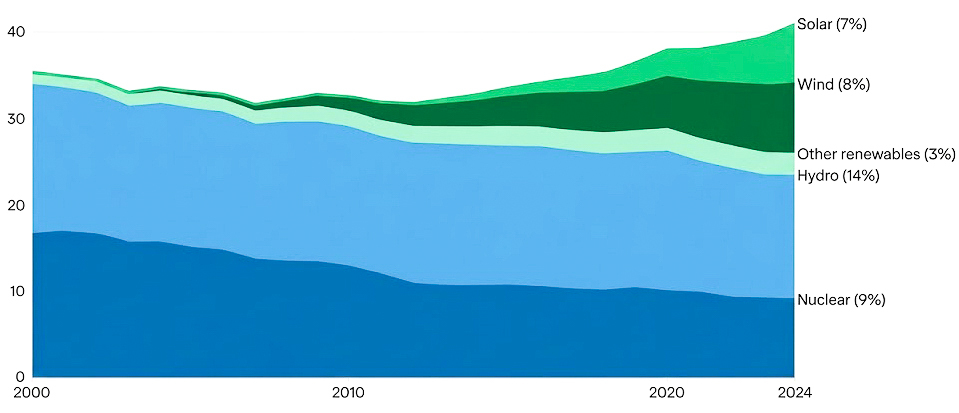
Source: Yearly electricity data, Ember.
All this has happened against a background of energy transition, ‘deglobalisation’ of supply chains and increasing security related competition and concerns. Despite Government actions to address demand growth such as the 2015 Paris climate agreements, demographics and economic development in emerging economies will continue to drive demand for some decades to come.
China has been ahead of the game. From before the turn of the century China was incorporating security of supply of energy, food and critical resources into strategic (5‑year) plans. This primarily involved developing domestic resources, building relationships, and accessing resources around the world, particularly where western presence was low or reducing, and developing processing technologies and capacity at home.
This was not a secret process. For example, the Belt and Road initiative was well publicised, and while not perfect achieved its primary aim of securing supplies of raw materials at competitive cost. Developing supplies of oil and gas, notably from Russia, Central Asia and the Middle East, and consistent demand planning have significantly reduced the potential for domestic economic risks and disruption.
In metals and minerals, huge and coordinated investment in domestic mining and processing, including refining, smelting and finished products, improved technologies and lowered costs materially. China is the largest energy consumer (a quarter of total demand) and now has over 50% of global steel production, with similar leadership in copper and aluminium smelting. China controls over 60% of mining and around 90% of rare earths processing. In most cases at unit cost levels around half western levels.

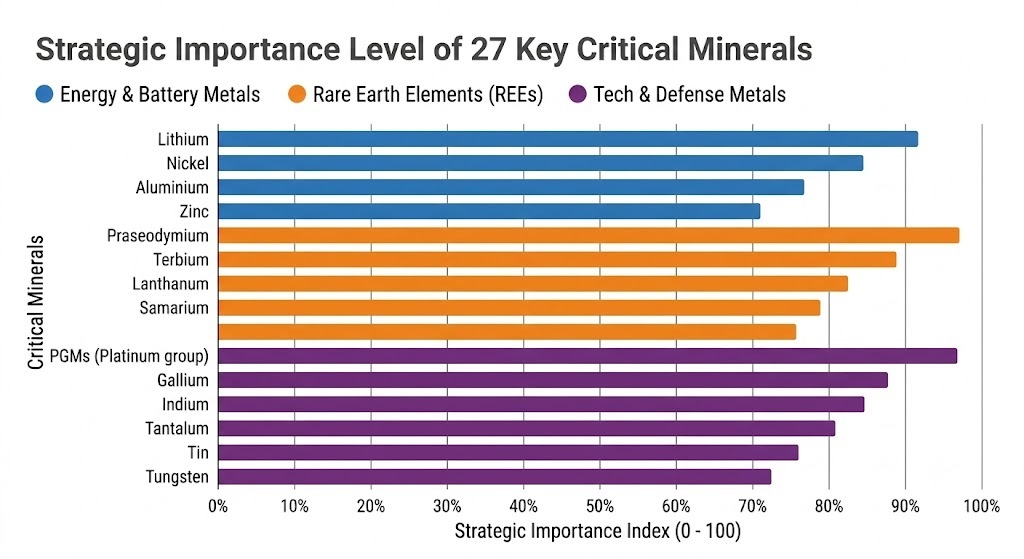
While initially driven by domestic demand and security of supply, this has become over time a significant advantage in foreign trade and affairs, and industrial strategy.
President Xi Jinping’s 2018 speech on industrial priorities (Made in China ‘25) was clear on moving China up the value chain beyond just raw materials, to lead on key technologies including transport, power, and new materials: the stated objectives are now largely delivered. This has established leading positions in many downstream technologies and markets, including renewable energy, electric vehicles, batteries and magnets.
China has now taken the lead in many technologies and economic models, and it would be wrong to assume this has been underpinned by lower environmental standards and state subsidy. Both may have helped China to establish the current positions over time, but standards have mostly moved to acceptable levels and, in many cases having established strong positions based on invested capital, economic support is no longer required. Chinese companies, including state owned enterprises, compete fiercely with each other in domestic and international markets, leading to increasing international competitiveness.
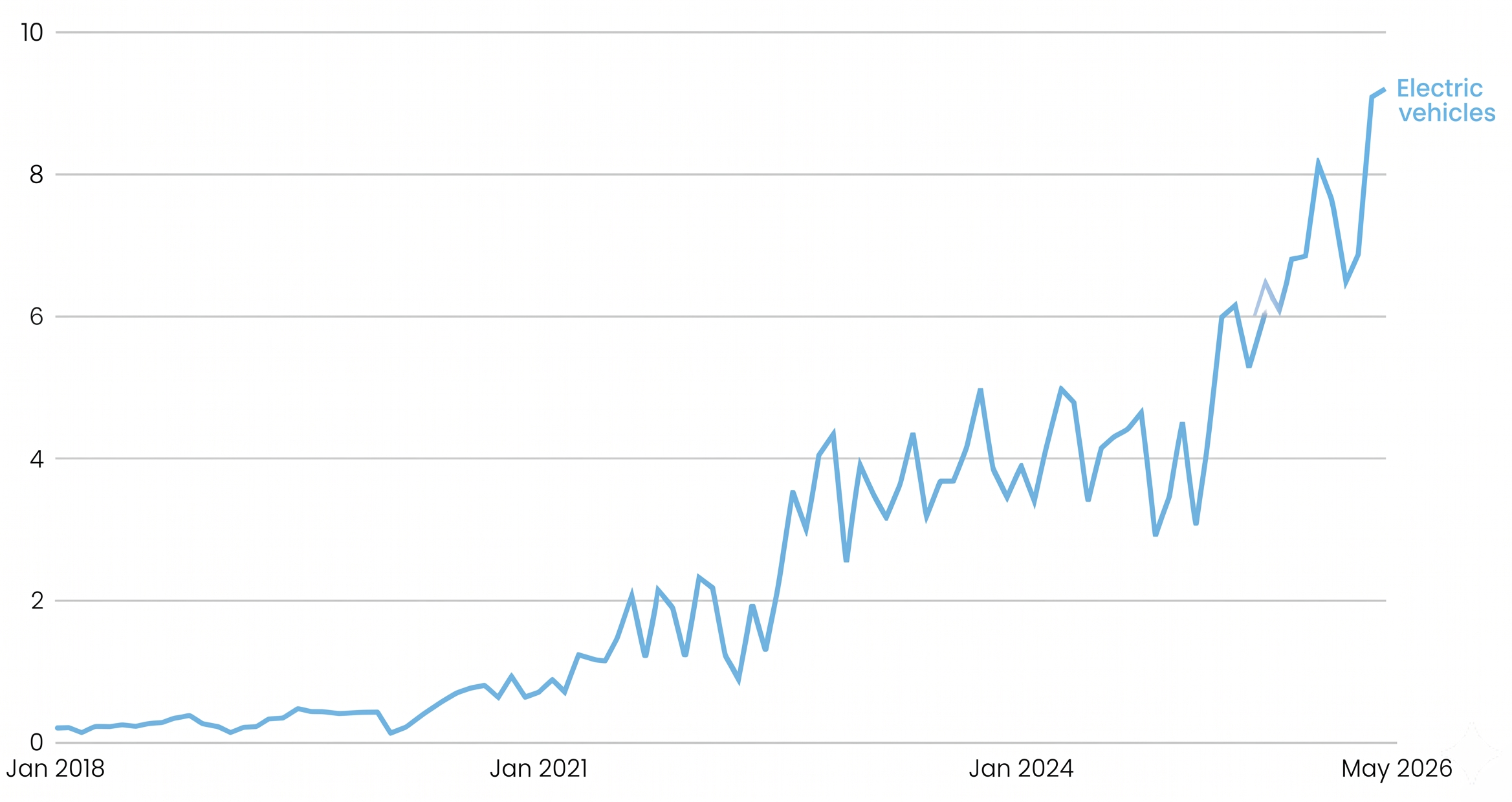
Source: China cleantech exports data, Ember.
For the West, the shared needs to invest in the energy transition, artificial intelligence, and defence means security of supply across value chains for most countries is firmly now back on the agenda.
Over the last few decades western nations and indeed multinational corporations have focused more on affordability and environmental priorities than on security of supply – the assumption being that trade and markets would work efficiently. Deindustrialisation has had a major effect, in effect exporting capacity and capability as well as carbon and other pollutants.
Some specific policies are already emerging particularly in the US. Elsewhere, there is debate but less clear or substantive policy. Oil markets are largely functioning effectively, despite price volatility. Gas markets continue to operate reasonably well albeit with medium term supply constraints in the Persian Gulf not yet clear and the fundamental shift from Russian pipeline supply to North American LNG still in progress.
The recent G7 meeting neatly summarised the overall strategic intent in critical minerals. The ‘Declaration for Securing Supply Chains for Critical Minerals’ does not mention China specifically, but does state:
“We express our grave concerns regarding the use of non-market policies and practices and economic coercion, including arbitrary export restrictions and retaliatory measures on critical minerals and their related dual-use items, all of which undermine economic security and resilience. We will work together with partners to reduce critical dependencies and ensure that attempts or threats to weaponise economic dependencies fail. We seek to deter and stand ready to take actions, where necessary in a coordinated manner, against economic coercion.”
The text then outlines intent and actions for industrial cooperation, financing, market structures, transparency, stockpiling and recycling. It also establishes a non-binding Critical Minerals Resilience and Production Alliance, including non-G7 countries such as Australia. Only a few specific targets are identified, including reducing dependence on ‘a single supplier’ for rare earths and magnets to under 60% by 2030.
Notwithstanding the important content of the declaration in terms of both economic and national security, there was little media or political interest in the G7 views.
However, China’s response has been predictable, defending export controls as ‘standard practice’ and warning of further restrictions if the G7 co-operate. Resource rich countries such as Brazil hesitated to endorse the declaration, concerned that it focused on extraction for western supply security rather than mutually beneficial partnerships, fostering local value creation. And even within the G7 members there were differences, including on stockpiling and the use of subsidised floor pricing.
The declaration did highlight 195 projects announced in 2026, with $74 bn of associated direct and equity investments, and offtake agreements. This includes the $12bn US Project Vault enabling aggregation of demand and coordination of strategic reserves. However, there are few specific details available to underpin outcomes by 2030 and beyond.
In other words, all potential actions are identified, but the alignment and well-resourced plans to deliver even a small number of targets are so far ill-defined.
Major energy corporates will continue to invest in line with economic opportunity, although note that the top five multinationals produce less than 10% of total oil and gas.
The greater challenge is in metals and minerals, where currently the four largest multinationals invest less than $40bn per annum, with insignificant amounts on processing and finished products. Unlike energy, there is therefore no immediately available large pool of capital and capability available to accelerate investments, and downstream capacity is fragmented or in very early development stages.
Recent moves to access new capital have been supported by the US Government, for example using the US International Development Finance Corporation, and similar considerations by the EU offer potential capital. But the real challenge may be finding project management skills and competitive technologies while also changing the narrative and enabling planning processes where societal opposition to industrial investment is strong.
The latter requires greater cooperation with governments, as well as some changes in risk appetite not just in companies, but potentially also from the providers of capital.
In terms of the narrative, there also needs to be greater honesty with society about, inter alia, the choices and costs around net zero and planning processes.
For governments, the challenge is primarily to turn words into action, enabling the private sector to generate and apply capability and capital.
For oil, the current market mechanisms are appropriate. However, this will require keeping physical choke points open, and better strategic reserve management. For gas, clearer policies on demand are needed to enable effective planning of long-term investments. These will include reduced reliance on Russian supply, growth and greater source diversity in LNG, and deeper and more liquid physical and paper markets.
For critical minerals, reshoring of industrial capacity, and in many cases developing, updating and implementing new processing technologies, are key. This may require some form of market support to minimise the potential impact of predatory pricing, and to enable investments. In turn, this needs to be integrated with support for developing recycling capacity, and strategic reserves, to reduce reliance on imports and price volatility.
Access to raw materials (mining) is important over time, which will require rebuilding relationships with host countries on a sustainable basis, and working to source financing and increase operating standards to global minimum levels. Time lags in developing both mining and processing will also likely require forward thinking to minimise disruption from physical shortages.
In summary, while there are major challenges for both Western governments and the private sector, actions identified and under way exist that will at least in part address concerns. There is an acute need to accelerate in some key areas such as minerals processing, and longer term to establish both the enabling frameworks for private investment, and improved relationships with resource holding countries — particularly China.
Simon Henry is Chief Financial Officer and Executive Director of Shell.